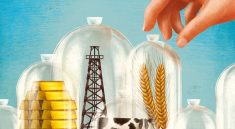


A commodity is a basic good used in commerce that is interchangeable with other goods of the same type. Regardless of who produces it, a unit of a commodity is largely identical in quality and function to another unit. This standardization allows commodities to be traded efficiently across global markets.
What Is a Commodity?
In economic terms, a commodity is a raw material or primary product that can be bought and sold, often as an input in the production of other goods or services. Because commodities are standardized, prices are determined by global supply and demand rather than branding or product differentiation.
Key characteristics of commodities:
- Fungibility – one unit can be substituted for another
- Standardized quality – defined grades and specifications
- Broad usage – used across industries and economies
- Tradable – actively bought and sold in organized markets
Major Types of Commodities
Commodities are broadly classified into categories based on their origin and use.
1. Agricultural Commodities
These are products grown or raised through farming activities.
Examples include:
- Wheat
- Corn
- Rice
- Coffee
- Cotton
Agricultural commodities are highly sensitive to weather conditions, crop diseases, and seasonal cycles.
2. Energy Commodities
Energy commodities power industries, transportation, and households worldwide.
Common energy commodities:
- Crude oil
- Natural gas
- Coal
Prices in this category are often influenced by geopolitical events, production decisions, and global consumption trends.
3. Metal Commodities
Metals are divided into two subgroups:
Precious metals
- Gold
- Silver
- Platinum
Industrial (base) metals
- Copper
- Aluminum
- Zinc
Precious metals are often used as stores of value, while industrial metals track economic growth and infrastructure demand.
4. Livestock and Meat
This category includes animals raised for food and related products.
Examples:
- Cattle
- Hogs
Livestock prices depend on feed costs, disease outbreaks, and consumer demand patterns.
How Commodity Markets Work
Commodity markets allow producers, consumers, and investors to manage price risk and discover fair market prices.
Spot Markets
- Transactions occur for immediate delivery
- Prices reflect current market conditions
Futures Markets
- Contracts to buy or sell commodities at a future date and price
- Widely used for hedging and speculation
Standardization in contracts ensures transparency and liquidity, making commodities accessible to participants worldwide.
Factors That Influence Commodity Prices
Commodity prices fluctuate due to a mix of natural, economic, and political forces.
Major price drivers include:
- Supply disruptions or surpluses
- Global economic growth or recession
- Currency movements, especially the US dollar
- Government policies and trade restrictions
- Technological advancements in production or storage
Why Commodities Matter in the Economy
Commodities form the foundation of the global economy. Nearly every product, from food and clothing to electronics and infrastructure, relies on commodities at some stage of production.
Economic roles of commodities:
- Support industrial and agricultural supply chains
- Act as inflation hedges in investment portfolios
- Provide income stability for producing nations
- Signal economic health through price movements
Risks and Opportunities in Commodity Trading
Trading commodities can offer diversification, but it also involves risk.
Opportunities
- Portfolio diversification
- Protection against inflation
- Potential gains from global growth trends
Risks
- High price volatility
- Exposure to unpredictable events
- Leverage-related losses in derivatives trading
Understanding market fundamentals is essential before participating.
Frequently Asked Questions (FAQ)
1. What makes a product qualify as a commodity?
A product qualifies as a commodity when it is standardized, interchangeable, and widely traded with minimal differentiation between producers.
2. Are commodities only physical goods?
Most commodities are physical goods, but financial instruments like commodity futures and options allow trading without owning the physical product.
3. Why are commodity prices so volatile?
Commodity prices react quickly to supply shocks, demand changes, weather events, and geopolitical developments, leading to frequent fluctuations.
4. How do commodities differ from manufactured goods?
Manufactured goods are differentiated by brand and features, while commodities are uniform and compete mainly on price.
5. Can individuals invest in commodities?
Yes, individuals can invest through futures contracts, exchange-traded funds, mutual funds, or commodity-focused stocks.
6. What role do commodities play in inflation?
Rising commodity prices often increase production costs, which can lead to higher consumer prices and contribute to inflation.
7. Are commodities a safe investment?
Commodities are not inherently safe or risky; their suitability depends on market conditions, investment goals, and risk tolerance.
If you want, I can also rewrite this article for SEO, localize it for a specific country, or shorten it for blog or affiliate use.